

F1-Inspired 3D Roller Coaster Train
Designing the Formula: Aerodynamics and Ferrari Land Inspiration
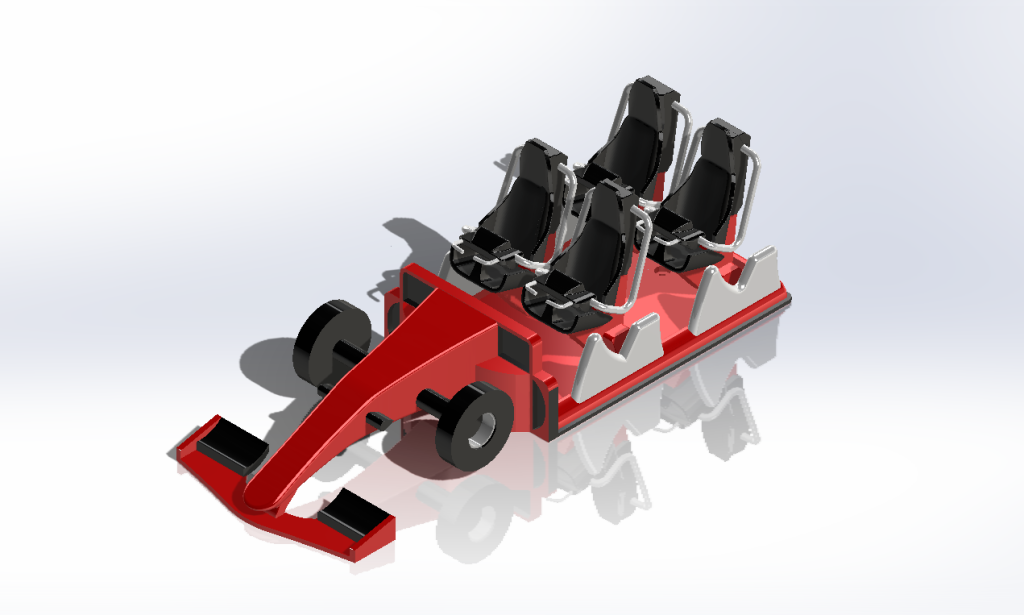
The design process for this project began with a clear vision: merging the high-speed soul of Formula 1 with the mechanical constraints of a scale roller coaster. I drew significant inspiration from Red Force at PortAventura’s Ferrari Land, specifically aiming to capture that aggressive, aerodynamic “nose” that defines elite racing. To achieve this, I engineered the main chassis as a robust, single-piece body printed in a striking red and white color scheme. To emphasize the F1 aesthetic, the front wing or “nose”, was designed as a separate component and printed in a high-contrast black and red finish, allowing for sharper detail and a more realistic racing silhouette.
Interior Seats: Scaling the Four-Passenger Configuration
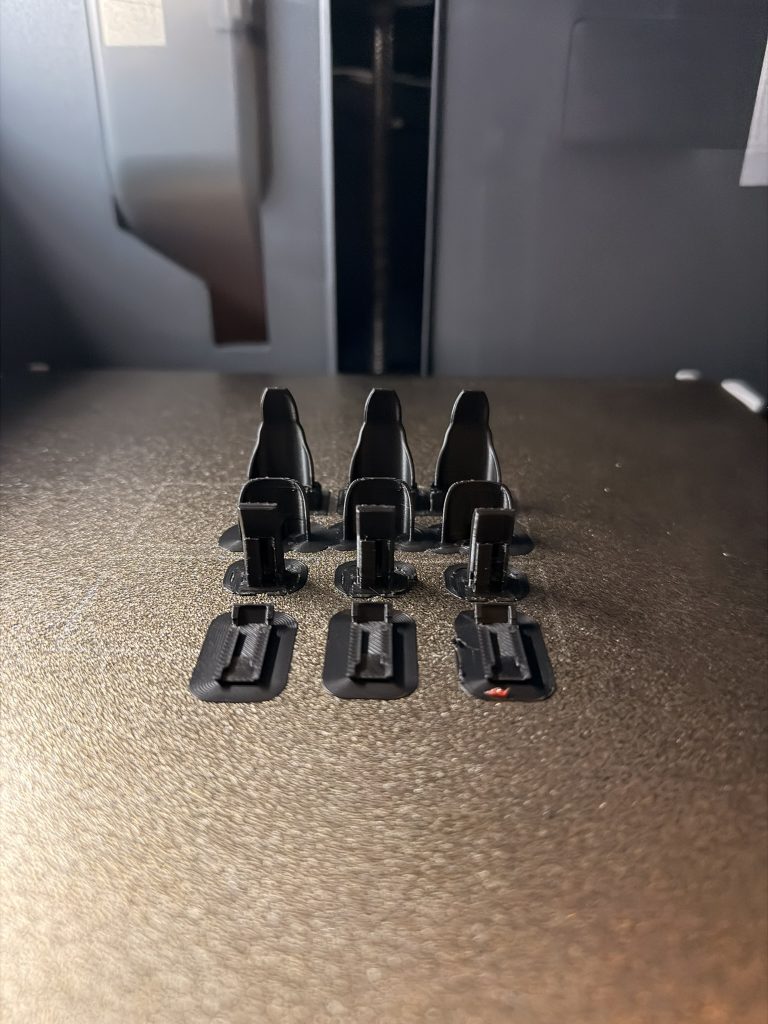
Unlike a traditional single-seater race car, the challenge of this model was integrating a full four-passenger seating arrangement within the F1-inspired body. The goal was to maintain the sleek, elongated aesthetic of a racing vehicle while accommodating four detailed seats inside the main chassis. Each seat was printed as a standalone unit to preserve the highest level of detail and then meticulously fitted into the primary structure. Achieving the right scale was a significant hurdle: the seats had to be compact enough to fit four-abreast or in tandem within the model’s footprint, yet large enough to look proportional to the track scale. Every component was secured using specialized modeling adhesives, with the miniature passenger restraints requiring extreme precision during the assembly phase to ensure they aligned perfectly with the seat frames and the overall vehicle body.
Mechanical Chassis: Bogie Integration and Magnetic Launch System
The structural integrity of the train relies on a heavy-duty main beam positioned directly beneath the body. This central chassis component is secured to the upper shell using precision M2x8 hardware, ensuring a rigid connection capable of handling the forces of the track. Beyond structural support, the underside of the beam features integrated PLA mounting brackets specifically engineered for Neodymium magnets. This design choice is fundamental to the model’s functionality, as it allows for a realistic magnetic launch mirroring the LSM (Linear Synchronous Motor) technology found on world-class coasters like Red Force. By embedding these magnets directly into the 3D-printed housing, the train is perfectly equipped for high-acceleration launches while maintaining a clean, streamlined profile from above.
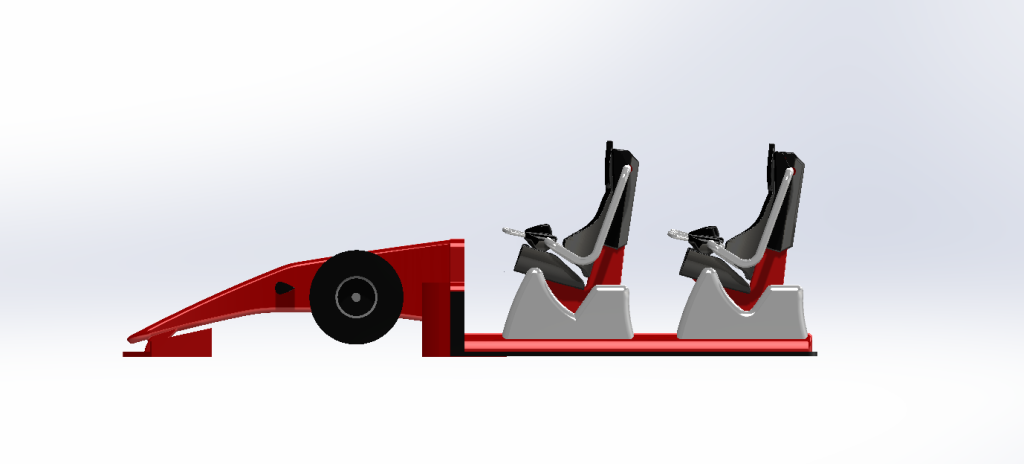
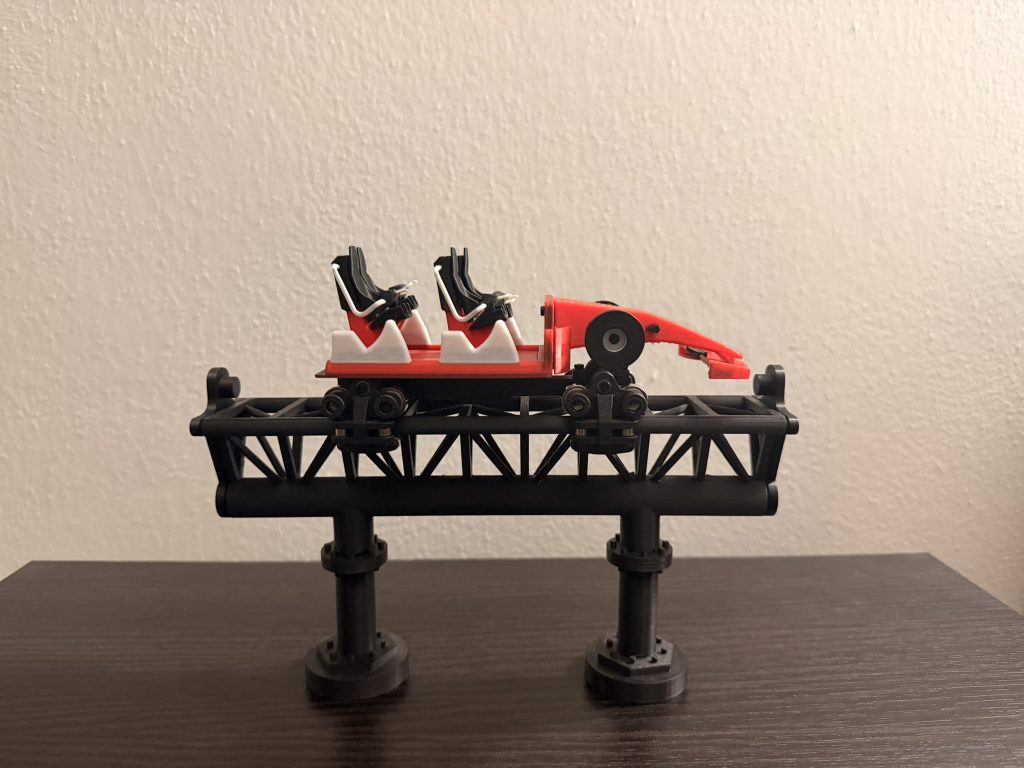
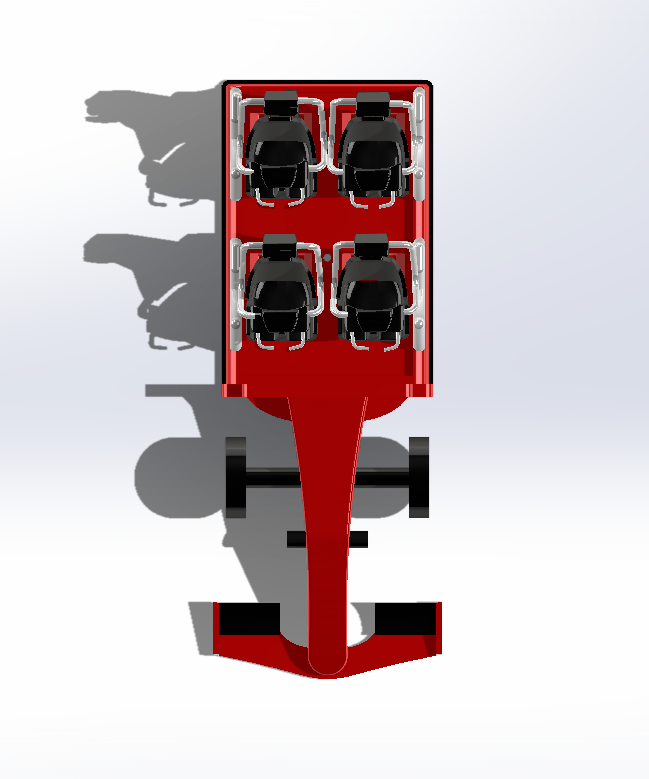
The maneuverability of the vehicle is managed by a sophisticated dual-axis system integrated into the main beam. The front axle features a central spherical joint, granting a full range of motion in all directions; this allows the leading wheels to navigate the complex geometry of inversions, loops, and steep transitions with zero mechanical resistance. Complementing this, the rear axle is engineered for horizontal movement only, providing the necessary lateral stability to keep the train centered during high-speed sections. Each axle is equipped with two independent bogies at the extremities, ensuring that the wheel assembly maintains constant contact with the rail, regardless of the intensity of the track layout.
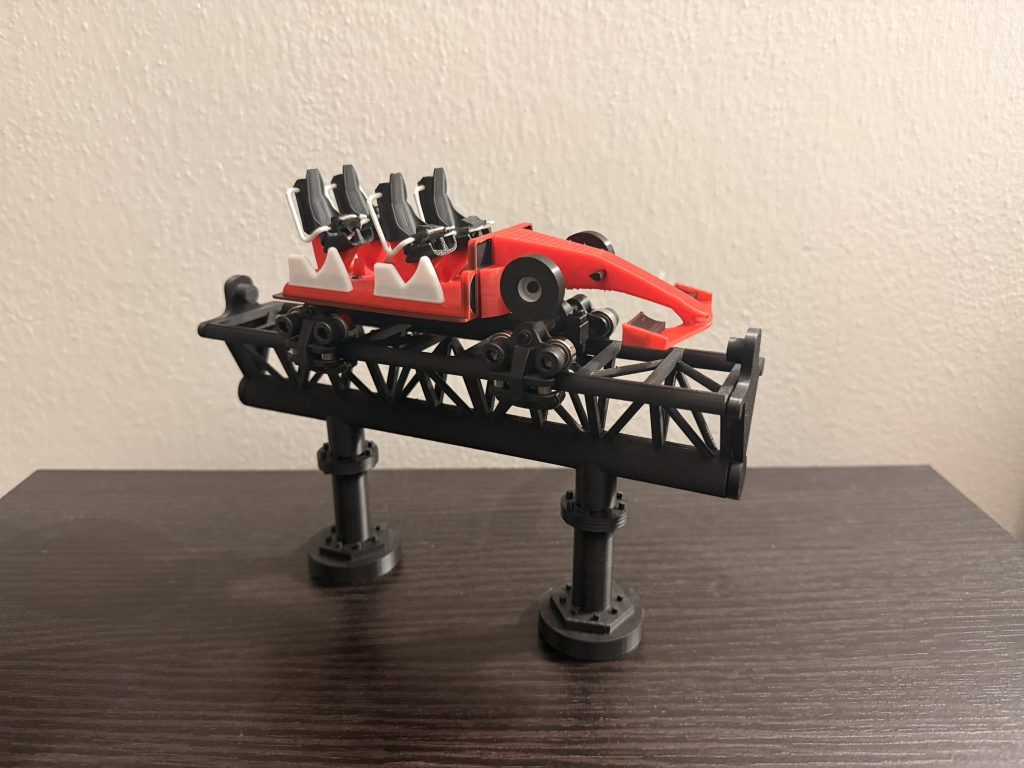
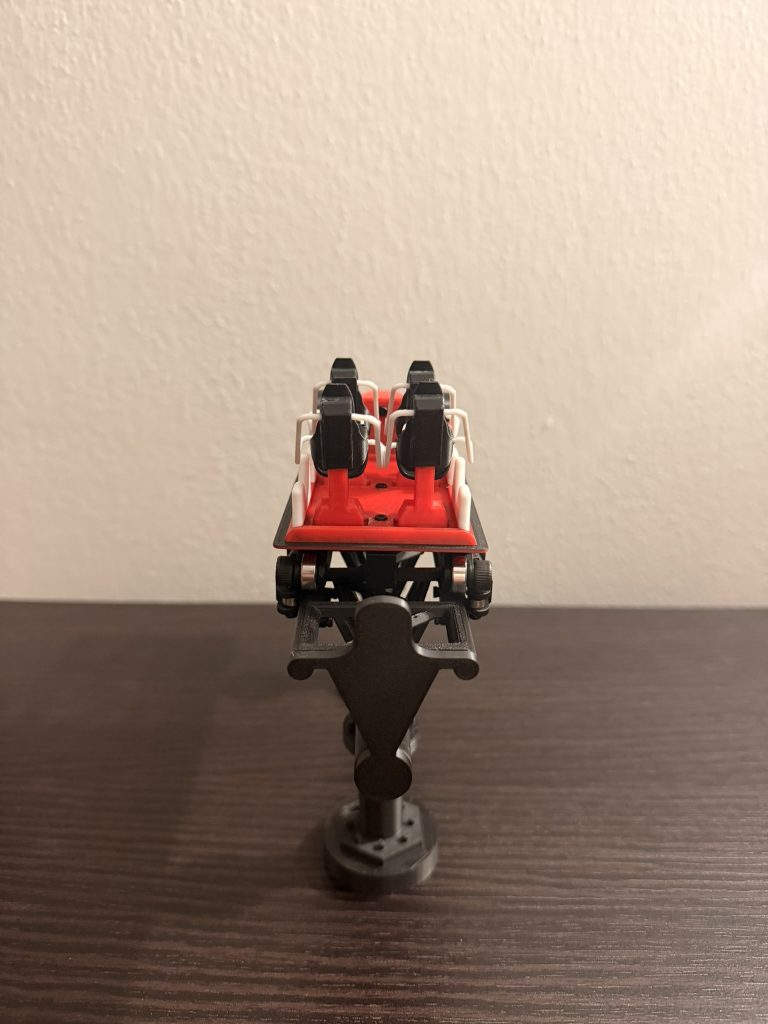
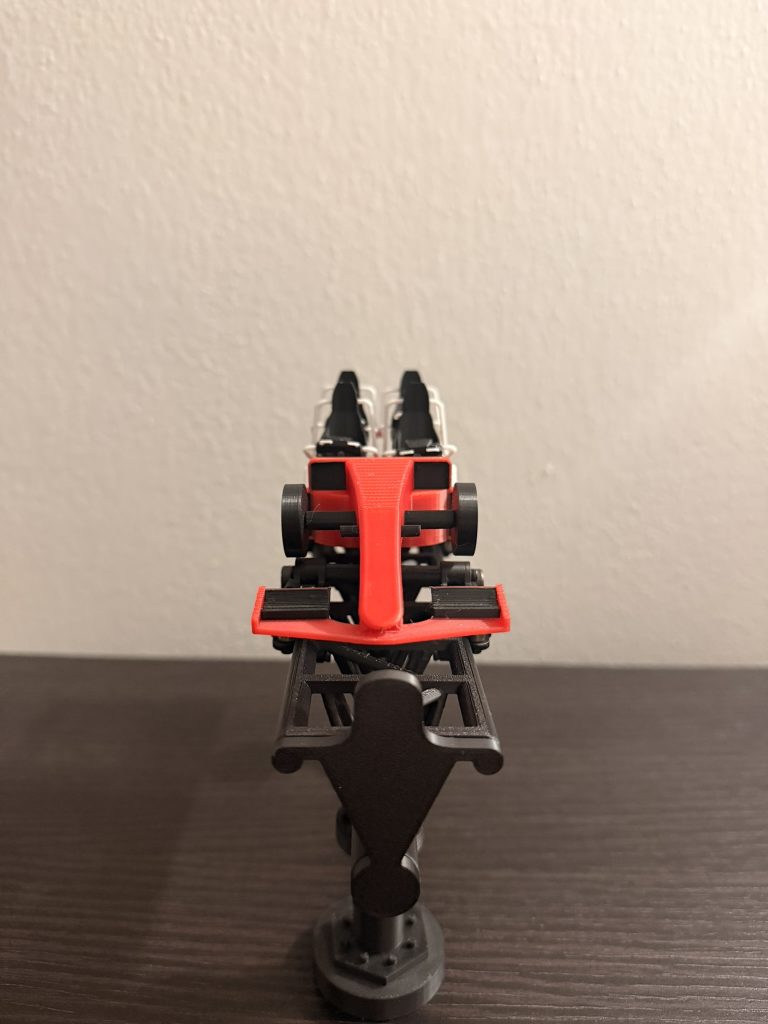
Red force coaster v1.1
The reliability of the train’s movement depends on a precision triple-wheel configuration for each bogie, designed to lock the vehicle securely to the track. Each assembly consists of one primary “road wheel” located directly beneath the chassis to support the vehicle’s weight, and two smaller specialized wheels. These secondary wheels act as side-friction and up-stop rollers, ensuring the train follows the track geometry perfectly and prevents derailment during high-force maneuvers. To minimize friction and ensure a smooth glide, I utilized high-quality miniature bearings:
- 16 MR52ZZ bearings for the larger road wheels
- 8 MR115ZZ bearings for the secondary rollers
The entire assembly is mechanically fastened to the bogie structure using a combination of M2x8 and M5x8 hardware, providing a robust and serviceable connection for high-performance scale testing.