
EPCOT: The Most Unique Park in Orlando
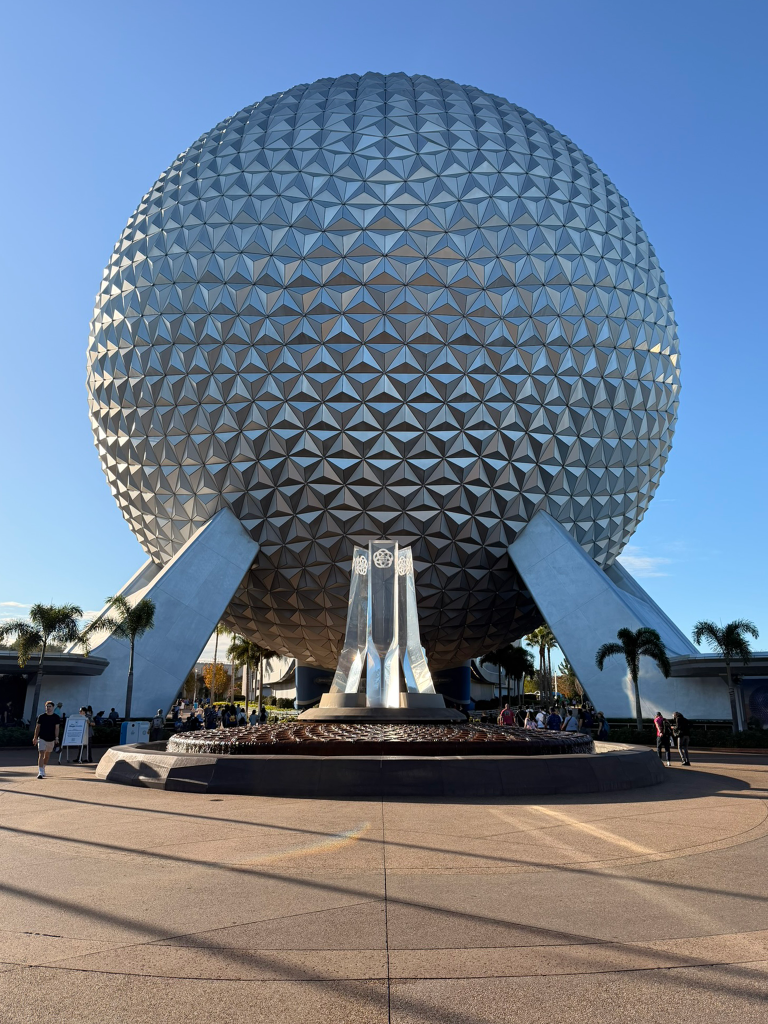
EPCOT is probably the most unique theme park in Orlando, and definitely the most different compared to the others. Instead of focusing only on rides and thrills, the park is built around a mix of technology, innovation, culture, and world exploration.
Instead of focusing only on rides and thrills, EPCOT is designed around a broader concept. The park is divided into areas that explore innovation, technology, and the future on one side, and culture and global traditions on the other.
On one hand, you have attractions and pavilions that focus on science, space, sustainability, and technological progress, offering experiences that are often more educational and reflective compared to typical theme park rides. On the other hand, the World Showcase takes you through different countries from around the world, each recreated with incredible attention to detail, featuring architecture, food, and cultural elements inspired by real locations.
This combination makes EPCOT feel less like a traditional theme park and more like a mix between an exhibition, a cultural experience, and an attraction park.
Because of this, it was actually the park that inspired me the least before my trip. It has fewer major attractions compared to other parks, and since I only had two days to visit both Disney parks, I decided to spend less time here.
World Discovery and Space-Themed Attractions
The first ride I went on was Guardians of the Galaxy: Cosmic Rewind. Since it’s the most popular attraction in EPCOT, we decided to head there immediately at park opening. Even so, we still ended up waiting a little over an hour.
I have to say, I still don’t fully understand why Disney decided to place this ride in EPCOT. It feels a bit out of theme. Sure, it’s set in space, so it somewhat fits with the nearby attractions, but having a Marvel coaster here doesn’t feel completely coherent with the overall identity of the park.
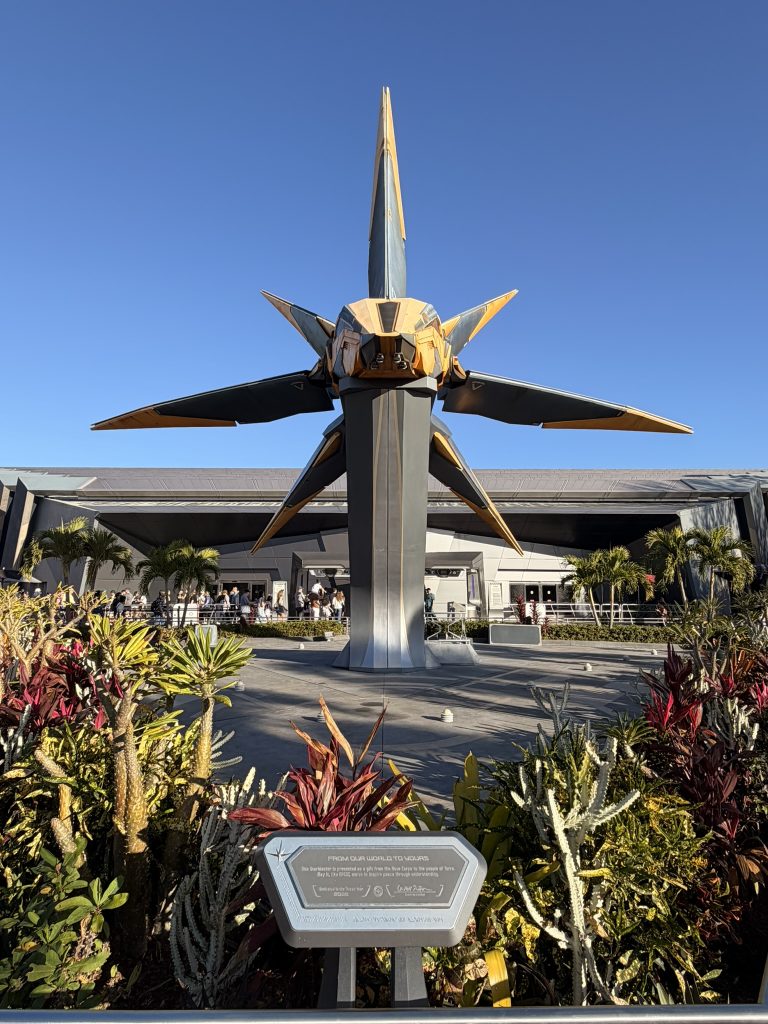
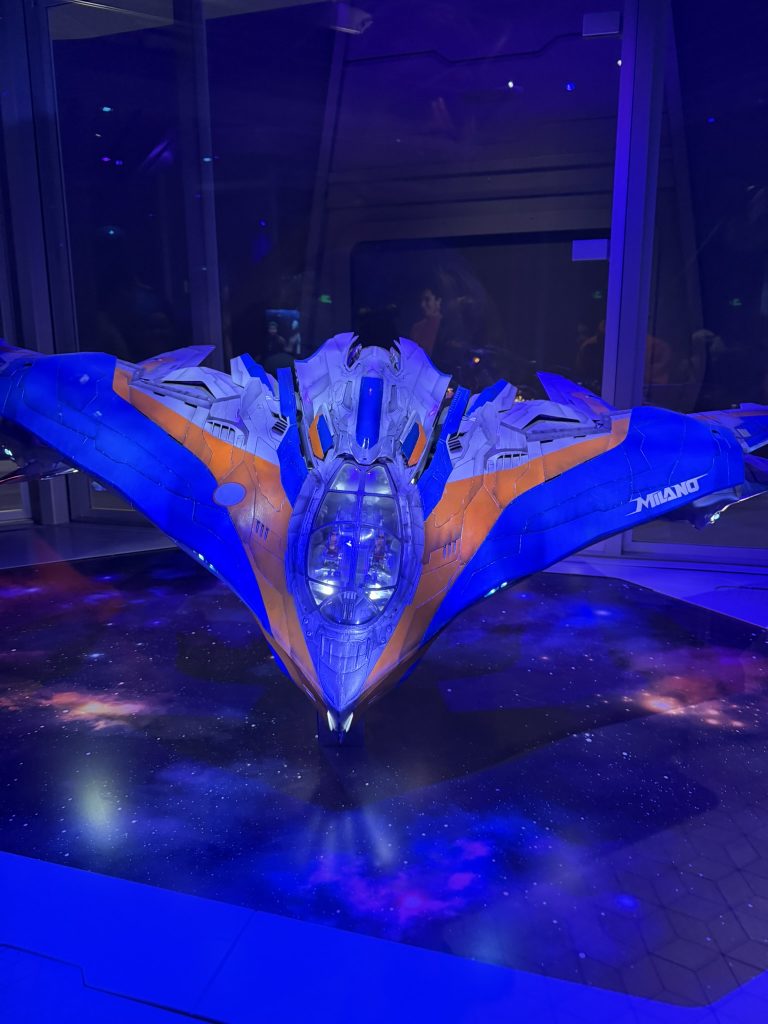
That being said, the ride itself is really impressive. It all starts with a well-themed queue and an excellent preshow that simulates boarding a spaceship. You’ll see animatronics of the characters from the films, and in true Disney magic, there’s a really cool moment where you’re “teleported” to the launch point.
The ride is a spinning indoor coaster set in the dark, surrounded by stars and space projections. It’s not extremely intense from a thrill perspective, but the rotating movement makes it a very unique experience.
However, I can totally see why this type of ride might not be for everyone. Since the vehicle spins in the dark, you lose your visual reference points, which can make it quite disorienting. If you’re prone to motion sickness, I definitely wouldn’t recommend riding it right after eating. In fact, this ride ended up being a bit too much for my partner, who felt sick afterwards… which meant I had to continue the rest of the morning rides on my own.
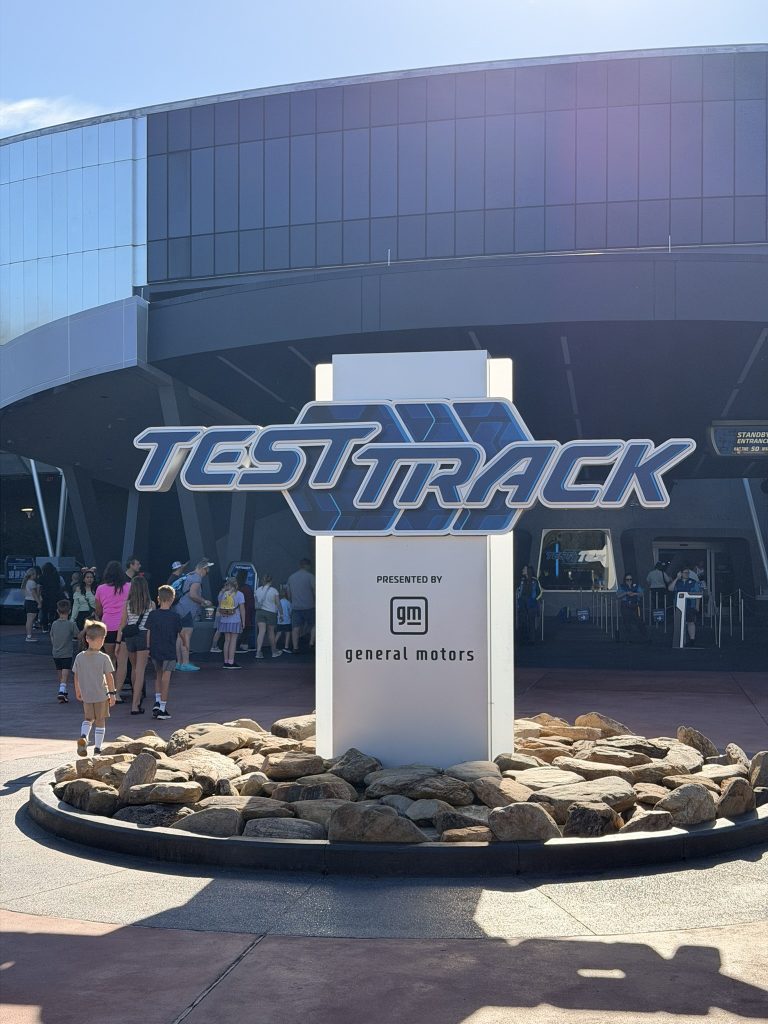
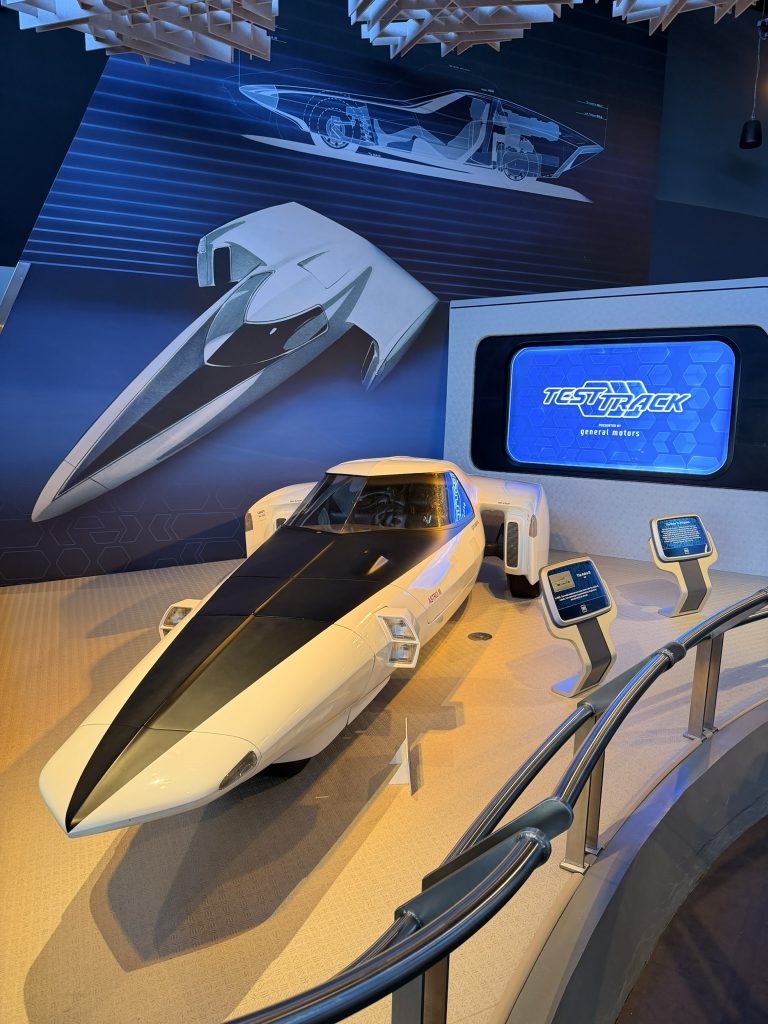
Another ride I experienced in this area was Test Track. It’s clear that the attraction is a bit dated compared to newer rides, but as a car enthusiast like me, I still found it really enjoyable.
One of the best parts is actually the queue, where you can see various concept cars and futuristic vehicle prototypes. It gives you a glimpse into how manufacturers imagined the future of mobility, which makes the wait itself quite interesting.
You can also notice how the ride reflects older ideas of what the future of cars would look like, which adds a bit of a nostalgic feel. You can also notice how the ride reflects older ideas of what the future of cars would look like, which adds a bit of a nostalgic feel.
At the end, the experience transitions into a short outdoor section, where the vehicle accelerates along a high-speed track, similar to a test circuit. It’s not extremely intense, but it’s definitely the most fun part of the ride and a nice change of pace after the indoor sections.
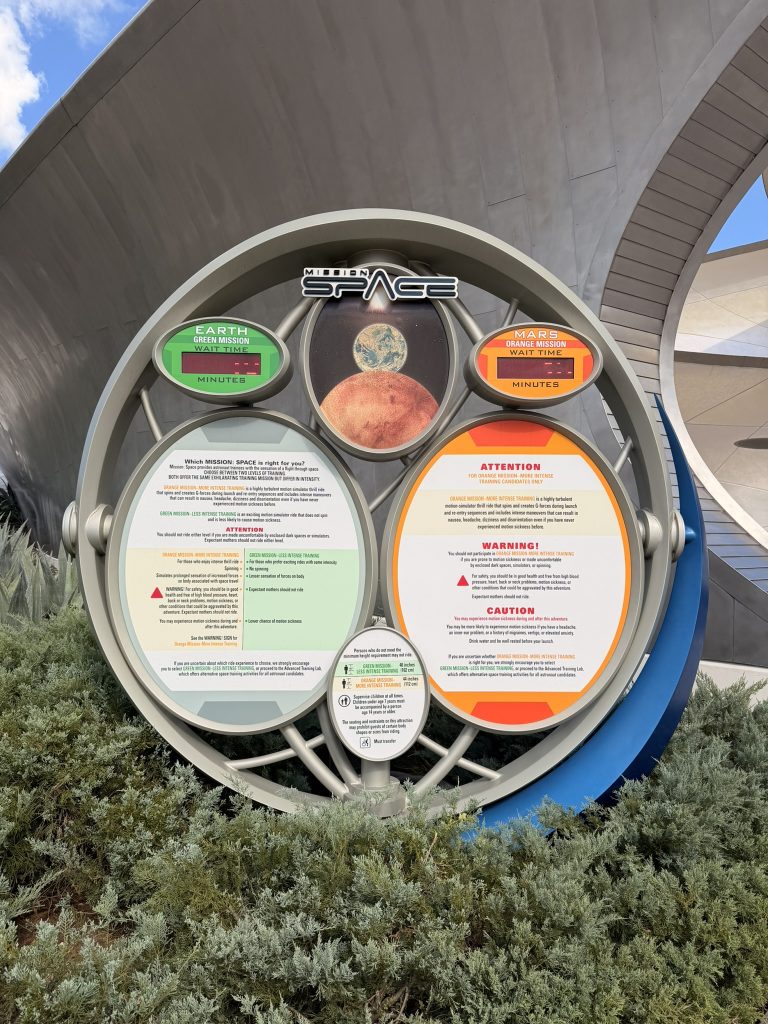
Another very interesting attraction in this area is Mission: SPACE. This is a space simulator developed by Disney in collaboration with NASA, designed to recreate as realistically as possible the experience of a rocket launch, followed by a journey through space and a landing on Mars.
Originally, the ride featured two identical simulators. However, after many guests reported feeling unwell, Disney decided to split the experience into two different versions: Mission: SPACE Green, which is the milder option, and Mission: SPACE Orange, which is the more intense version.
I would strongly recommend choosing the orange version only if you are completely sure about it. The simulator is extremely well done, but also very intense.
There are multiple warning signs before entering the attraction, advising against the orange version if you suffer from motion sickness, claustrophobia, or if you’re sensitive to strong G-forces and spinning sensations. And honestly, those warnings are absolutely justified.
The simulator works using a massive centrifuge that spins to generate real G-forces, reaching levels of around 2 to 2.5 G during the most intense phases of the launch. Guests are seated inside small enclosed capsules positioned along the outer edge of the centrifuge, designed to replicate the cockpit of a spacecraft.
Inside each capsule, every rider has a personal screen placed directly in front of them, acting as a window into space. Through this screen, a video simulation guides the entire experience, from launch to the mission itself. During the ride, the screen and control panel move closer to your face, stopping just a few centimeters away. This enhances immersion, but can also trigger a strong sense of claustrophobia for some people.
The overall concept is somewhat similar, although less intense, to Antares at Movieland in Italy. However, Mission: SPACE feels much more advanced and physically demanding due to the use of real G-forces and the more immersive simulation.
Each capsule is also equipped with a motion sickness bag, which is not just there for decoration. I actually saw the person sitting next to me use it right after the ride ended, which says a lot about how intense the experience can be.
As if that wasn’t enough, while the centrifuge is spinning, the capsule itself tilts and moves in different directions to simulate the motion of a rocket in flight, making the whole experience even more realistic and physically demanding.
The green version, on the other hand, is identical in structure but does not include the centrifuge rotation. This makes it significantly less intense, while still offering a similar visual experience.
To wrap up this area, I visited the ride inside EPCOT’s iconic sphere: Spaceship Earth. This is a classic dark ride, and while it’s not particularly intense, it’s actually quite long and very interesting.
The attraction takes place entirely inside the sphere, with a continuous path that first goes upward and then descends back down. At the very top, you reach a beautiful moment where you’re surrounded by a stunning starry sky, which is probably one of the most memorable scenes of the ride.
The experience itself is a journey through the history of humanity, starting from prehistoric times and moving through different eras, showing the evolution of communication, technology, and society. It then transitions into a vision of the future, offering a perspective on how people once imagined technological progress.
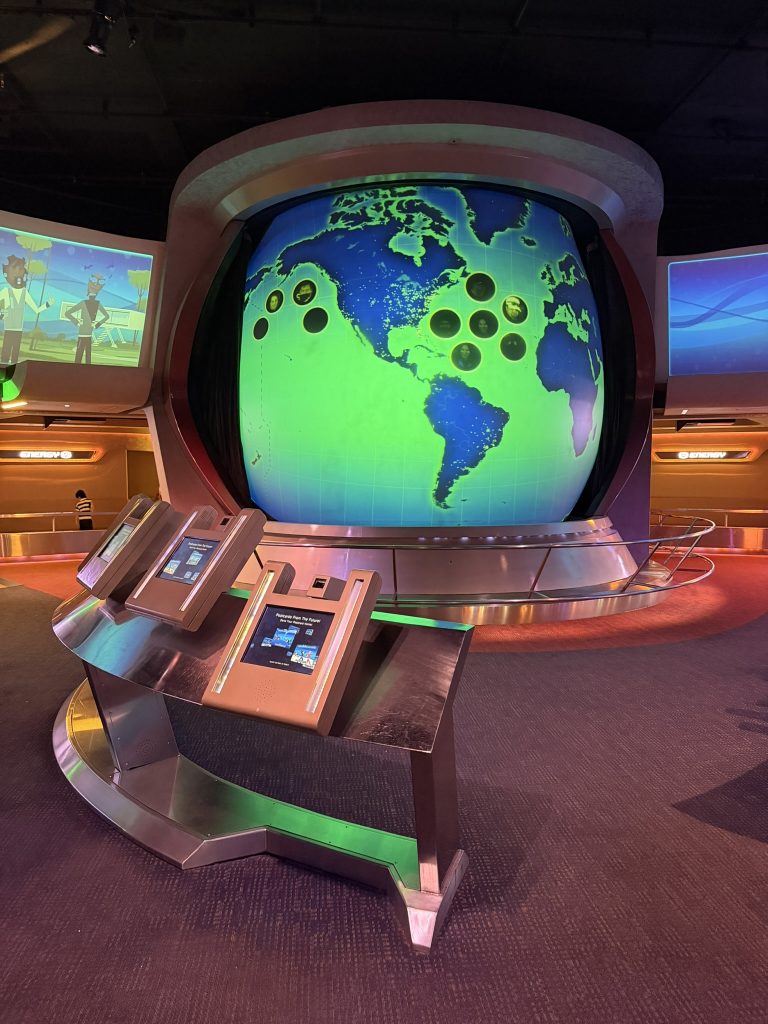
Once you exit the ride, you enter a large interactive area filled with small games and activities, especially designed for kids. This section reflects Walt Disney’s original vision of the future, which today feels a bit retro-futuristic, but still charming and fun to explore.
The Land Pavilion and Soarin’
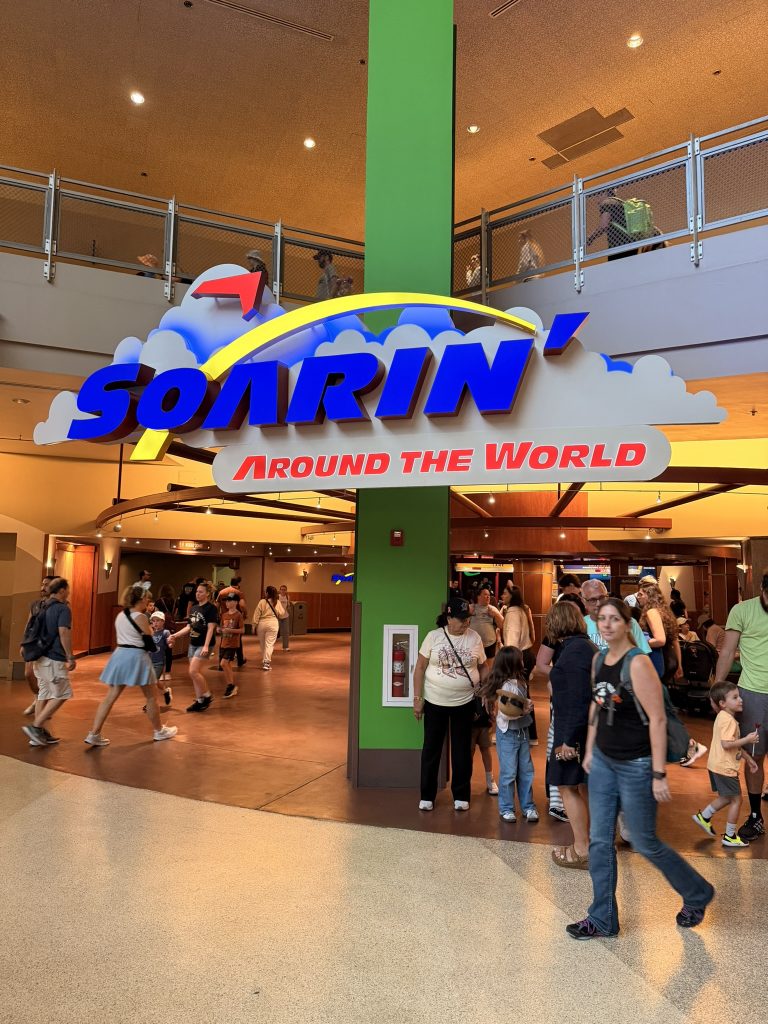
The next area I explored was the one hosting Soarin’. To be honest, this part of EPCOT left me a bit confused, as I didn’t fully understand what it was supposed to represent. The building that houses the attraction feels somewhat like a large indoor complex, almost resembling a shopping mall, which gave me some unusual vibes compared to the rest of the park.
That said, the ride itself is definitely worth it. Soarin’ is a flying theatre attraction that simulates the experience of flying over some of the most iconic locations around the world. You’re lifted in front of a massive curved screen, and through a combination of visuals, motion, and subtle effects, it really feels like you’re gliding through the air.
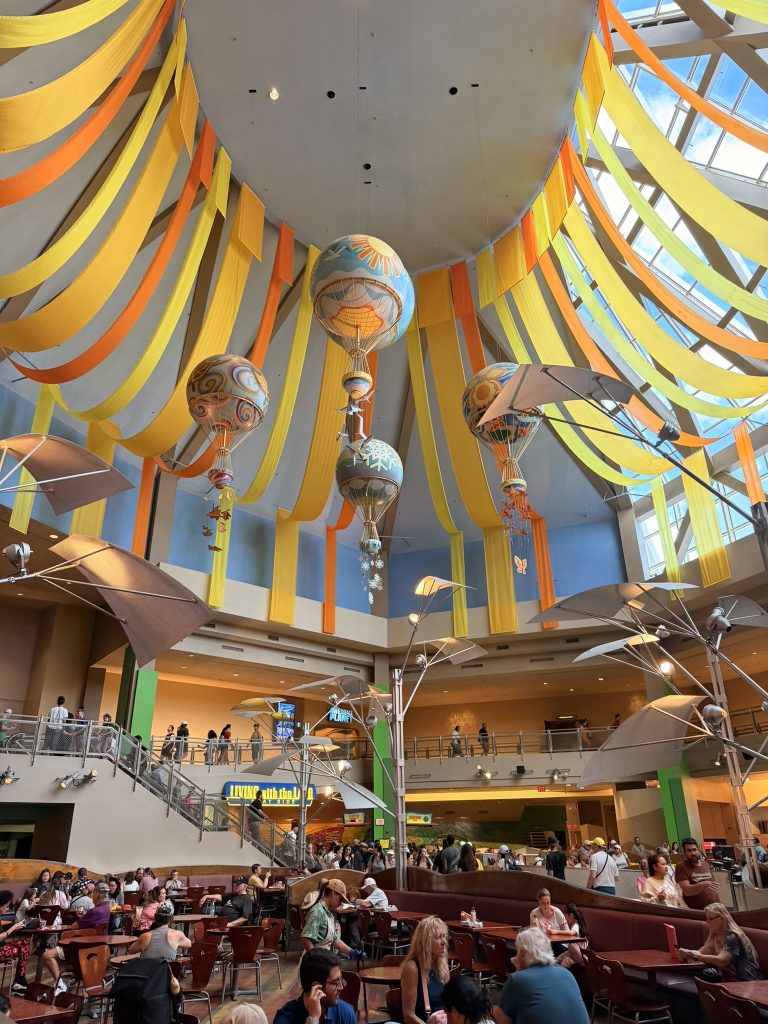
The experience ends with a final scene right in front of the Disney World castle, which is a nice touch and a classic Disney-style ending.
If you’ve ever been to Europa-Park in Germany, the ride is very similar to Voletarium, as they both use the same flying theatre concept
World Showcase
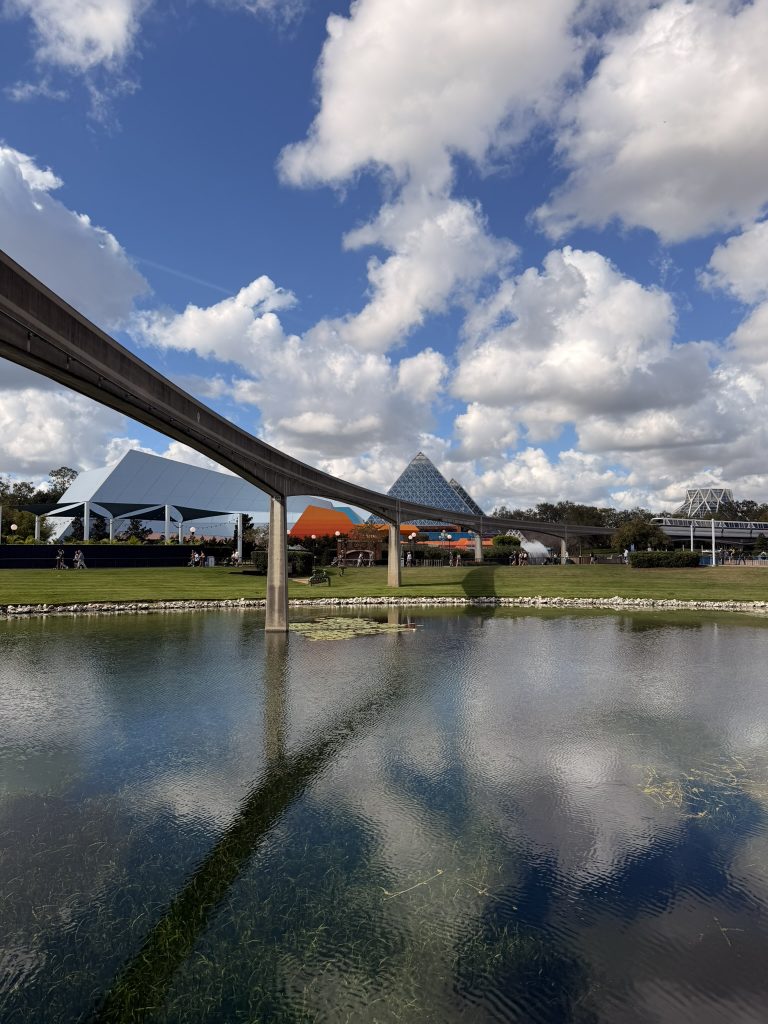
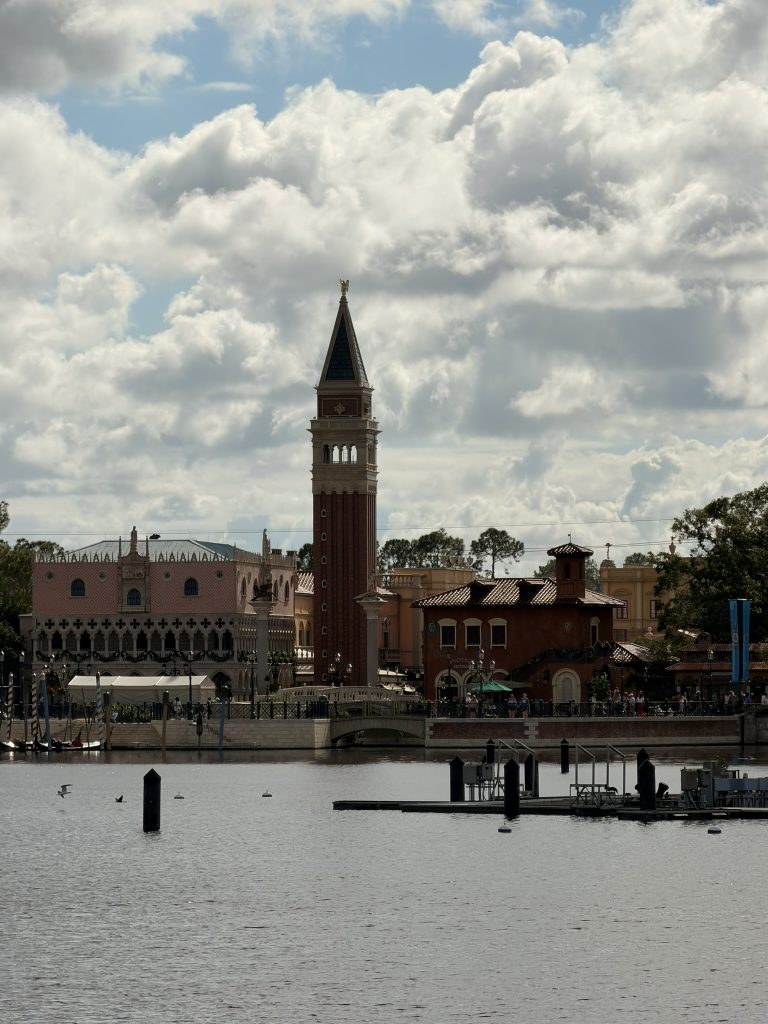
I wrapped up the rest of my morning by taking a quick walk around the lagoon to explore the World Showcase area. This is probably the most distinctive part of EPCOT, but also the one that feels the least focused on rides.
The only major attraction here is Frozen Ever After, which I decided to skip due to the long wait times and also because a similar, and apparently even better, version is opening soon in Disneyland Paris.
All around the lagoon, you’ll find pavilions representing different countries from around the world. These include detailed recreations of places like German and French castles, as well as areas inspired by cities like Venice in Italy. The level of theming is very good, and it’s definitely a pleasant area to walk through.
That said, most of what you’ll find here are restaurants, shops, and cultural experiences rather than rides. It’s a nice part of the park, but in my opinion, it’s more worth visiting once you’ve already experienced the main attractions, or if you’re specifically interested in trying food from different countries.