
Track 3D B&M
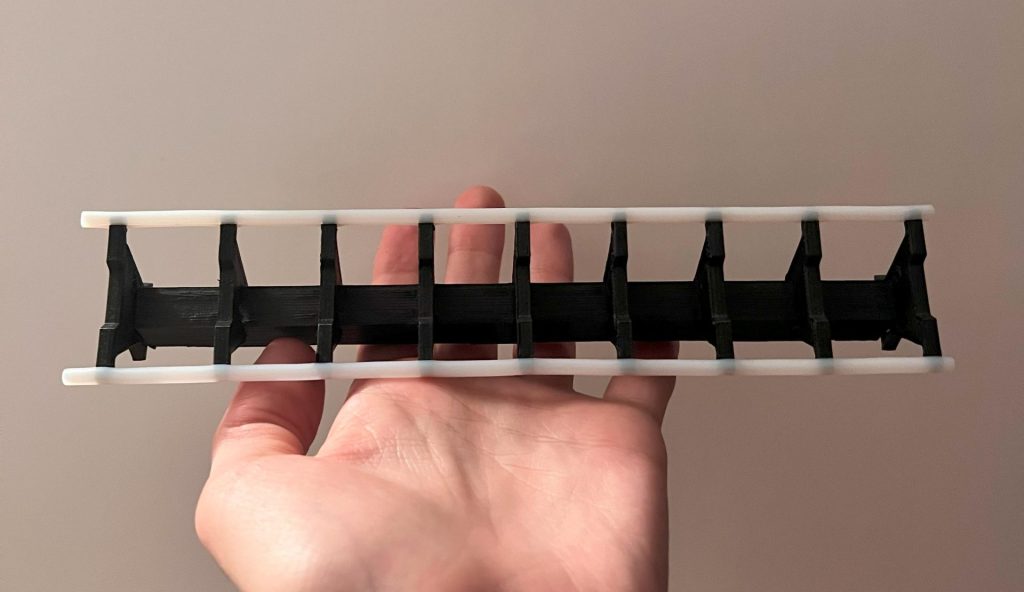
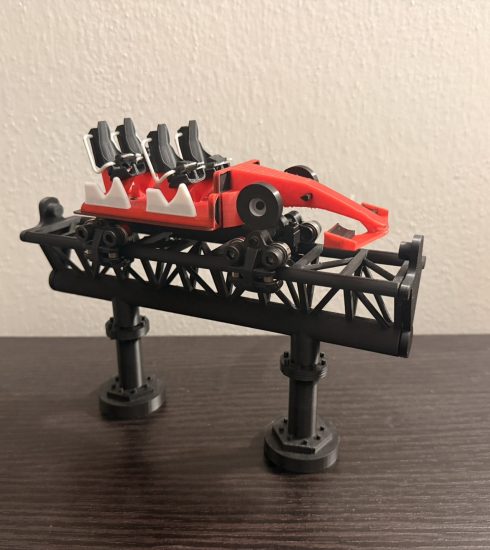
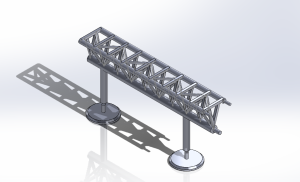
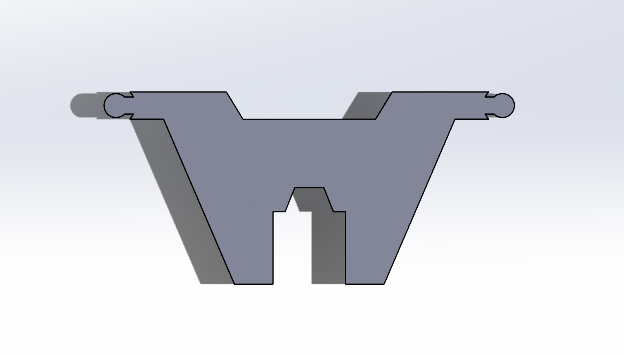
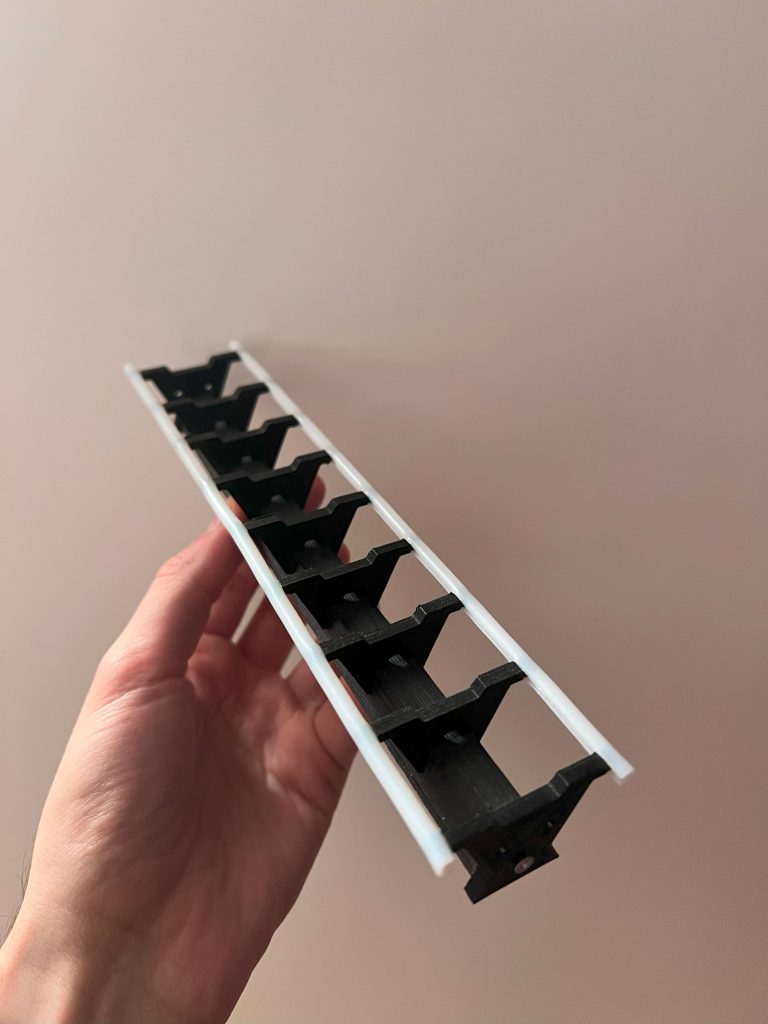
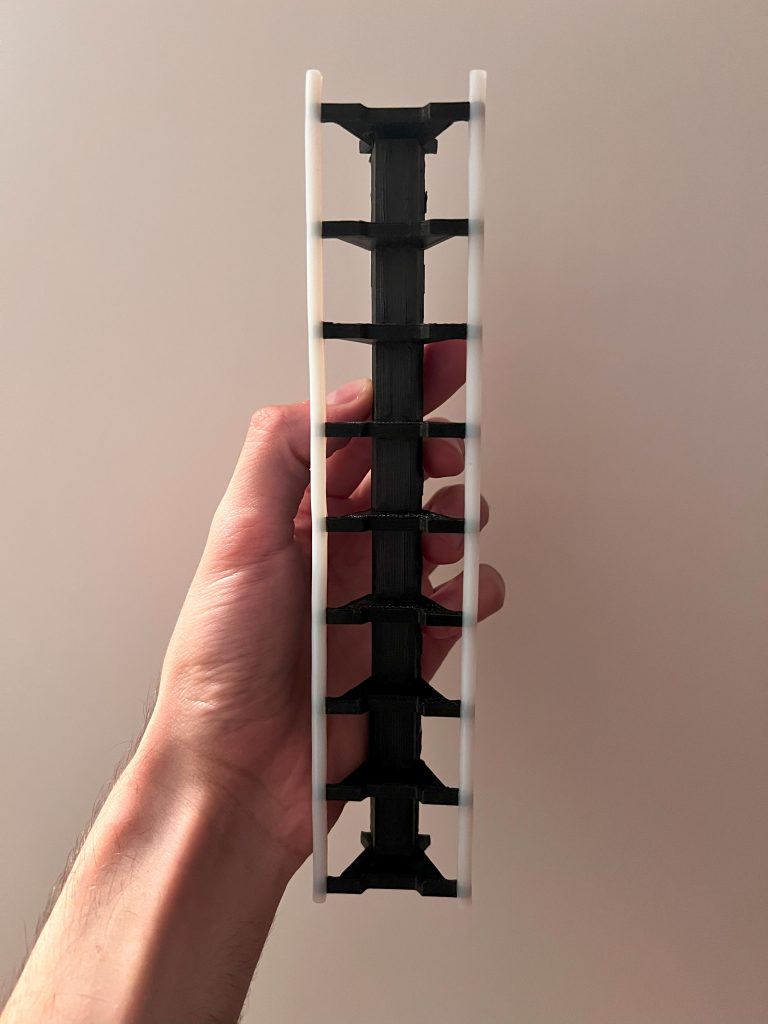
After some thought about my next scale coaster project, I decided to build a section of track that would resemble, in style and structure, those used by B&M roller coasters. I wanted to recreate that characteristic central beam, but instead of opting for a rectangular section, I chose a trapezoidal shape, more faithful to the actual profile of the supporting beams of this type of coaster. The result had to be a sturdy but lightweight structure that was modular and easy to replicate.
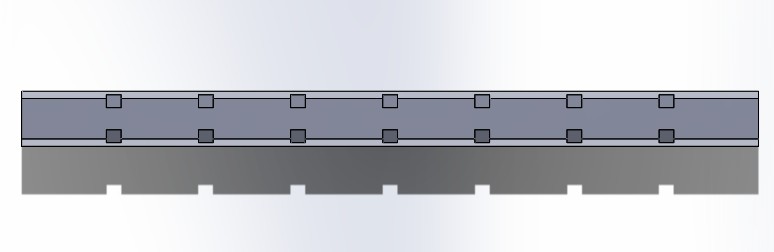
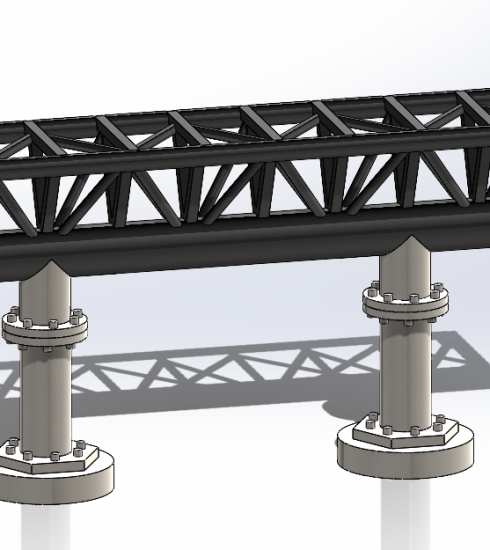
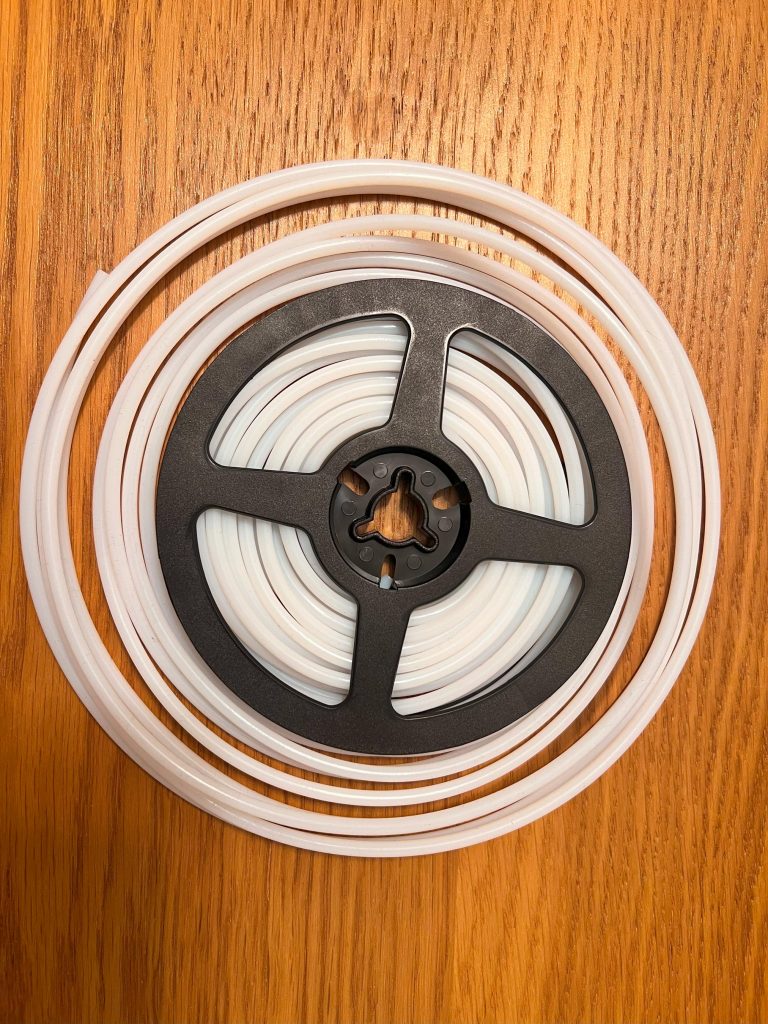
The idea was simple: a trapezoidal section with a slightly narrower upper side, useful for housing a series of side fins. These fins were to act as supports for the actual tracks. Instead of 3D printing the tracks, I chose to use an alternative material: flexible plastic tubes with a diameter of 3 mm, which are much smoother and more visually appealing, as well as easier to adapt to curved segments. This also allows the carriage to roll more easily on the surface, thus avoiding the imperfections resulting from 3D printing.
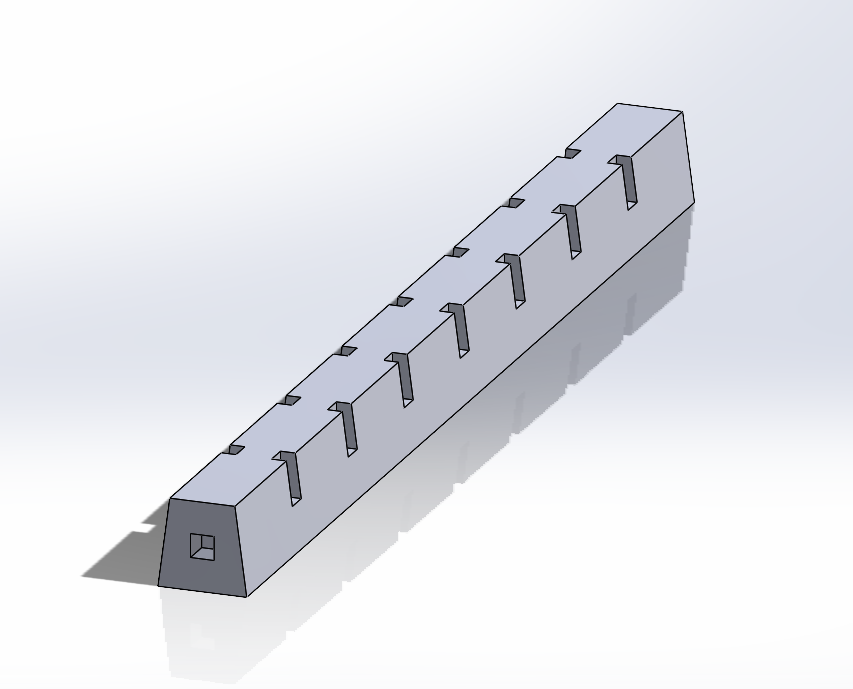
The tabs were designed with a semi-circular groove capable of accommodating and retaining the tube by interlocking, without glue. The main challenge was to find the right balance between tolerance and seal: the tube had to fit easily, but also remain firmly in place once inserted. After an initial test print, I had to slightly revise the diameter of the seat in the fins, because the tube was difficult to insert, due to some minor deformation caused by the printing process.
To achieve a really clean and uniform result, I didn’t rely on simple cutting by hand with scissors or a cutter. Instead, I made a small 3D-printed cutting tool, designed specifically for working with 3 mm tubes. It is a compact block in which the tube is slid through a guide hole, calibrated to the exact diameter of the material.
Inside this hole, I inserted two razor blades, angled towards each other, so as to cut away a thin strip of plastic cleanly and precisely. The process is smooth and does not require too much force: each tube is cut to the same length, with clean, regular edges, ready to be fitted perfectly into the side flaps of the moulded track.
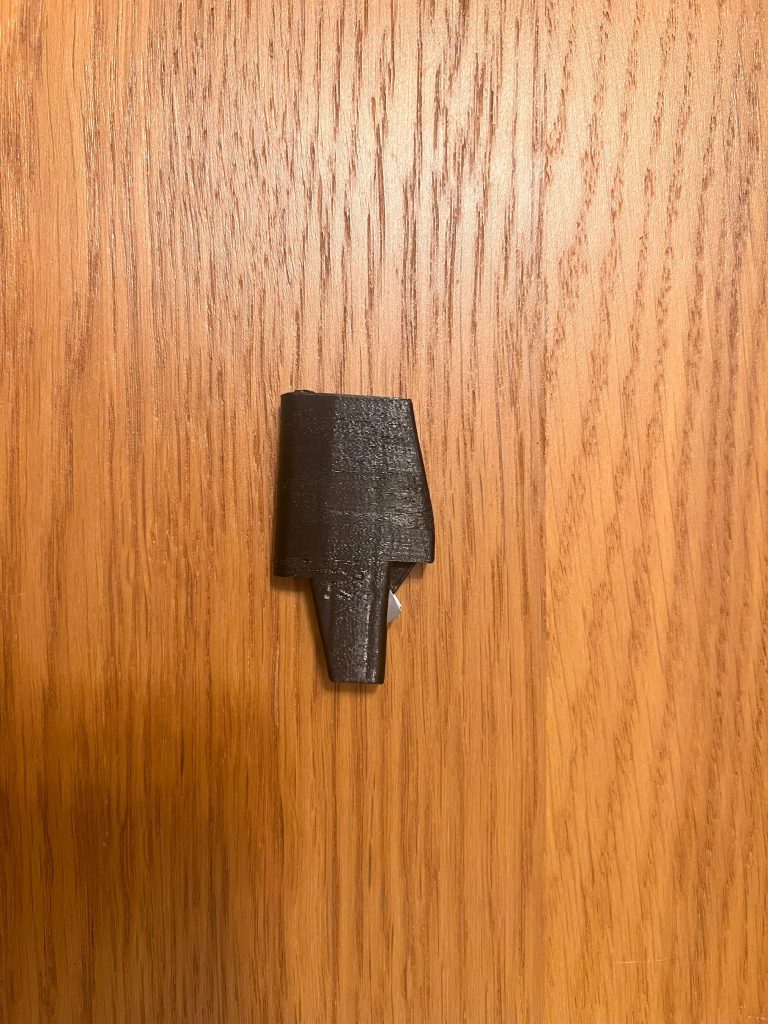
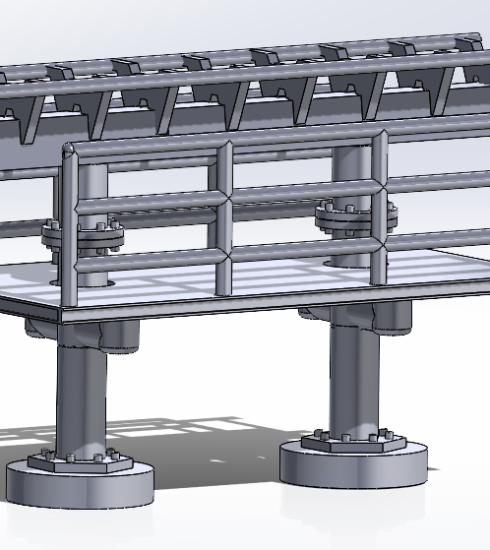
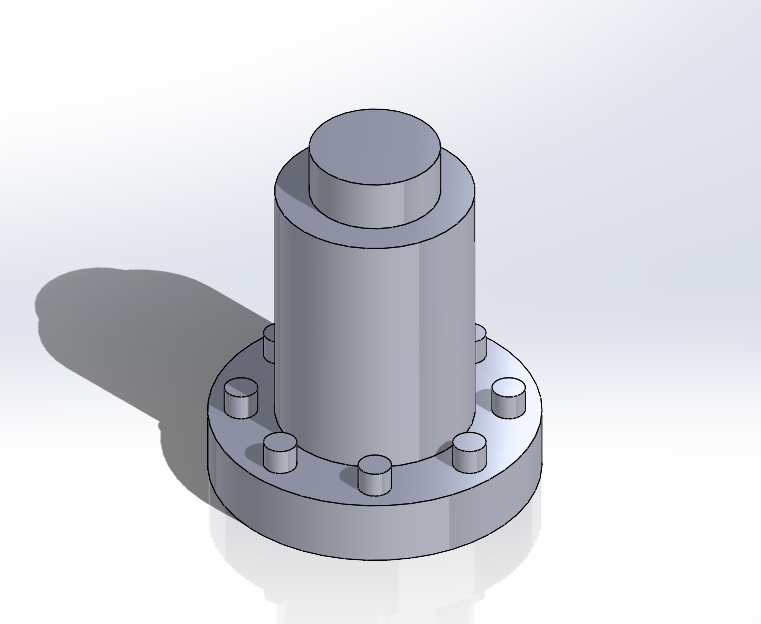
To complete the design, I also created two support pillars to hold the track in place. The pillars fit easily under the central beam, ensuring good stability without the need for gluing or complex systems. The aim was to make them modular and suitable for mass production, so that they could be used in future segments, with different angles or heights.
Technical specifications of the 3D model:
- Approximate scale: 1:40 compared to the real version
- Coaster type: B&M – Straight section
- Track length: 22 cm
- External track diameter: 3 mm
- Internal distance between tracks: 4 cm
- Thickness of central load-bearing beam: 10 mm
- Model height: 5 cm
- CAD software: SolidWorks
- 3D printer used: Creality Ender 3 V2
- Printing material: PLA (white, opaque)
- Joining method: interlocking + cyanoacrylate glue
- Structure: crossed vertical and diagonal tubes
- Estimated printing time: ~12 hours